Importing a Jute Bag Printing Machine Into Indonesia: Shipping, Installation and Support
Start With the Right Machine Configuration and Import Scope
Importing a jute bag printing machine into Indonesia starts with machine configuration, not freight. Match bag dimensions, print colours, jute material behaviour, required output and available factory space. A flexographic printing machine for jute bags should be specified around the actual production job.
N-TEX provides technical consultation and customized machinery solutions based on application requirements, materials, output requirements, dimensions and process conditions. You can explore N-TEX industrial machinery solutions when defining the required scope.
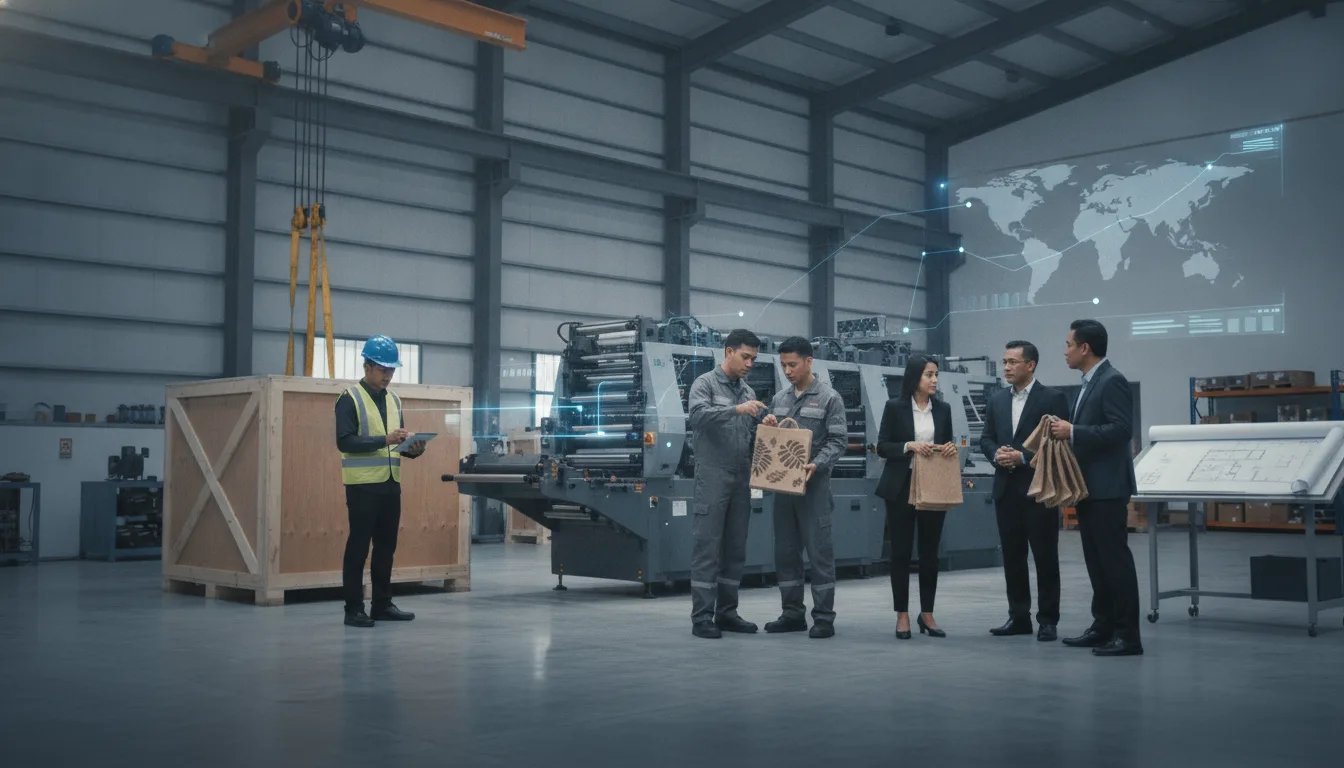
- Export packing, freight, insurance and customs clearance
- Inland movement, unloading, installation and commissioning
Production-job example: a buyer’s brief should state the jute bag width and length, number of print colours and target output. These details determine the handling format, colour configuration and production requirements to be evaluated before quotations are compared.
Confirm Indonesian Import Readiness Before You Place the Order
Before committing to a flexographic printing machine for jute bags, confirm that your Indonesian importing entity, business registrations and any product-specific controls are appropriate for the planned transaction. A qualified Indonesian customs broker or trade adviser can verify current official requirements for your circumstances.
Validate the HS classification before shipment. Duty, tax treatment, restrictions and required supporting records may change with classification, so Indonesia machinery import requirements should be checked against current official guidance rather than assumptions from a previous import.
- Proforma invoice and final commercial invoice
- Packing list with package count, weights and dimensions
- Transport document and insurance documentation, where applicable
- Machine technical description, including model, function and specifications
Apply document control across the file: the machine description, quantity, declared value and packing details should match on every document. If a discrepancy arises, resolve it before dispatch to avoid clearance delays for your jute bag printing machine Indonesia project.
Plan Shipping, Packing and Landed Cost
For industrial machine shipping to Indonesia, start with verified crated dimensions, gross weight and lifting points. Assess export packing, container suitability, the Indian origin port, Indonesian arrival port, and the inland route to your factory, including delivery-vehicle access and unloading equipment. A flexographic printing machine for jute bags may require handling beyond standard palletised freight.
Agree delivery terms and the handover point for freight, insurance, customs coordination, and risk. No single term suits every buyer: control, local capability, and service scope should guide the choice.
Use your buyer-specific landed-cost worksheet to separate:
- Equipment price, export packing, international freight, and cargo insurance where selected.
- Indonesian duties and taxes, brokerage, port charges, trucking, unloading, and installation-related local costs.
Request current freight-forwarder quotations stating shipment assumptions, quote validity, exclusions, and whether destination charges are included. Keep each quotation with its revision date and compare like-for-like scope before selecting a route or setting the budget. For importing a jute bag printing machine into Indonesia, shipping, installation and support budgets should be planned together.
Define Responsibilities From Port Arrival to Factory Delivery
Customs release is not the finish line. Before the shipment leaves, assign named parties for container release, port handling, inland trucking, lifting equipment, route checks and unloading. Confirm who carries each cost and who signs each handover.
- Verify factory gate width, road access, floor loading, available unloading equipment and protected storage space.
- Request a site logistics assessment with access photos, an unloading plan and lifting-equipment capacity before finalizing delivery.
For a jute bag printing machine Indonesia delivery, inspect packages at handover for visible shipping damage and count discrepancies. Photograph and report any issue promptly under the agreed transport and insurance process.
Prepare the Site Before Installation Begins
Before delivery, obtain and review the approved machine layout, utility requirements, any foundation or floor criteria, electrical details and operating clearances. Compare these documents with the buyer’s electrical single-line drawing and facility utility records, rather than relying on preliminary assumptions.
For effective printing machine installation, qualified local personnel should confirm:
- Electrical supply compatibility, earthing arrangements and cable-routing paths.
- Ventilation, lighting, safe operator access and maintenance space.
- Jute material handling, ink and print-process provisions, finished-bag movement and space for quality inspection.
Plan the work area around the actual production flow, from incoming jute bags through printing and inspection to finished goods handling. Final site requirements for a jute bag printing machine Indonesia project depend on the selected configuration, so confirm every requirement against the supplier’s approved documentation before commissioning begins.
Manage Installation, Commissioning and Acceptance Testing
Treat factory arrival as the start of a controlled handover, not project completion. For importing a jute bag printing machine into Indonesia, prepare a written startup plan before technicians begin work.
Sequence the work so each stage is verified before the next:
- Delivery inspection and packing-list verification
- Mechanical placement, utility connection, alignment and setup
- Safety checks, trial production and documented acceptance
Agree in advance who performs each task, which local technicians or contractors are required, what tools and consumables must be available, and how technical questions are escalated. This makes jute bag printing machine commissioning easier to manage when responsibilities cross supplier, freight, contractor and factory teams.
Define acceptance criteria against the agreed job specification: print registration, print consistency, production workflow and safe operation. Record trial results, adjustments and sign-off evidence rather than relying on vague expectations. For application guidance, explore N-TEX industrial machinery solutions.
Build a Support Plan for Stable Production After Startup
Stable output from a jute bag printing machine in Indonesia depends on clear ownership after commissioning. Assign operator training, daily cleaning, routine inspections and lubrication checks to named roles, then plan essential spares before a wear item causes an extended stop.
- Keep a production-issue record for misregistration, ink transfer, web tracking, drying or material-handling faults.
- Review the factory’s actual maintenance log and stoppage records to identify recurring issues and prioritize support questions.
- When requesting help, share the machine identification, bag and ink details, settings, clear images or video, and a concise fault description.
N-TEX is a manufacturer and exporter of industrial machinery in India, offering technical consultation and application-focused solutions for flexographic printing machines for jute bags. To discuss broader equipment needs, explore N-TEX industrial machinery solutions.
Frequently Asked Questions
Can N-TEX customize a flexographic machine for jute bag production?
Yes, N-TEX offers customized machinery solutions for flexographic printing applications, including jute bag production. To assess suitability, provide your bag dimensions, jute material details, required print colours, expected output and operating conditions; you can also explore N-TEX industrial machinery solutions.
Who should confirm the HS classification for a printing machine?
A qualified Indonesian customs broker or trade adviser should confirm the HS classification for a printing machine before shipment. The correct classification can affect applicable duties and taxes, import restrictions, and the documentation required for customs clearance.
Should inland delivery and unloading be arranged before the machine ships?
Yes. Before dispatch, confirm factory access, unloading equipment, protected storage space, and who is responsible for inland transport after port release, helping prevent clearance delays, handling risks, and avoidable demurrage or delivery issues.
What details should I send when requesting a machine consultation?
Please send your bag application, substrate type, bag dimensions, required number of print colours, target output, available floor space, utility details, and any current production bottlenecks. This information helps N-TEX recommend a suitable jute bag printing machine configuration and identify relevant customization requirements.
Conclusion
Successful import of a jute bag printing machine into Indonesia depends on planning the full process, from machine specification and shipping documents to site preparation, installation and ongoing technical support. N-TEX can contribute technical consultation and customized machinery solutions to help align the printing configuration and procurement details with your jute bag production requirements.
Plan Your Jute Bag Printing Machine Configuration
Discuss your jute bag application, production requirements and machine configuration with N-TEX. Its technical consultation and customized machinery solutions can help define the information needed before procurement and shipment planning.
Learn more