Flexographic Printing Machine for Woven Sacks
What Is a Flexographic Printing Machine for Woven Sacks?
A flexographic printing machine for woven sacks is industrial equipment used to apply branding, product information, handling instructions and graphics to woven bag materials. It supports woven sack printing within a bag-making or fabric-processing workflow before the next conversion stage.
A woven sack flexo printer transfers ink to a moving woven substrate through flexible printing plates. It is configured around the sack or fabric printing process, including the material form and production sequence. A PP woven sack printing machine or HDPE woven bag printing machine can be selected alongside related bag conversion lines.
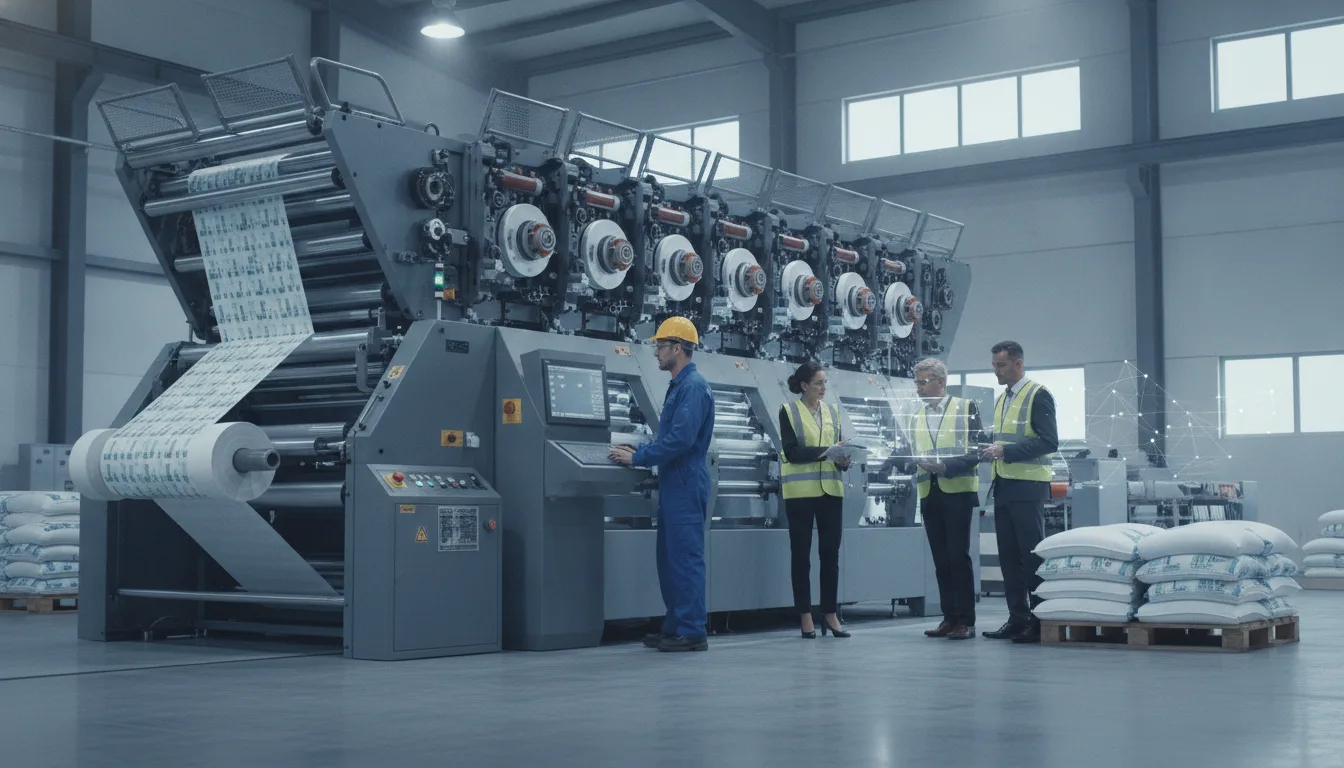
N-TEX offers Flexographic Printing Machinery for HDPE and PP woven sacks, as well as FIBC printing machine applications, jute, canvas, paper sacks and other industrial substrates. Explore N-TEX industrial machinery solutions for related equipment categories.
Where Woven Sack Printers Fit in the Production Process
Woven sack printing works best when it is planned as part of the full material flow, not as an isolated operation. The sequence begins with prepared woven fabric or sack material, then moves through printing, ink handling or drying as required, cutting, conversion, inspection and packing.
Process flow, confirm against your actual workflow:
- Woven fabric preparation → flexographic printing → drying or ink handling → cutting → bag conversion → inspection → packing
- Formed sack preparation → flexographic printing → drying or ink handling → inspection → packing
The right flexographic printing machine for woven sacks depends on whether graphics are applied to web material before conversion or to a formed sack. Neither arrangement is universally preferable, since material format, print requirement and production sequence all influence the decision.
Capacity should also be aligned with cutting machinery and bag conversion lines. A printing line can become a bottleneck when its output, material handling, or downstream conversion capacity does not match the rest of the plant. N-TEX can review these connected requirements through its industrial machinery solutions.
HDPE and PP Woven Sack Printing Considerations
HDPE and PP woven materials are not uniform. Fabric construction, resin type, surface condition, coating or lamination, bag format and intended print coverage can all affect production planning for a flexographic printing machine for woven sacks.
Before selecting a PP woven sack printing machine or HDPE woven bag printing machine, review ink compatibility, any required surface preparation, artwork complexity and drying requirements with your ink and process partners. Coated, laminated and differently finished substrates should be validated separately from uncoated material.
Use material trials and sample review to confirm suitability for the actual bag and workflow:
- Resin type and fabric condition
- Coating, lamination or other surface finish
- Bag dimensions, format and handling direction
- Artwork, print area and number of colours
- Planned production workflow, including conversion steps
Where documented, request a verified N-TEX sample-testing example relevant to your substrate. Explore N-TEX industrial machinery solutions to discuss application-specific machinery options.
How to Select the Right Woven Sack Flexo Printer Configuration
Use this illustrative framework to define a flexographic printing machine for woven sacks around the job, workflow and available plant resources.
| Selection factor | What to review |
|---|---|
| Material and format | PP, HDPE, FIBC, bag dimensions and feed form |
| Workflow location | Printing before or alongside conversion |
| Colour configuration | Artwork colours and future job mix |
| Artwork and coverage | Branding, text, panels and repeat layout |
| Production volume | Expected job frequency and changeover needs |
| Operator involvement | Routine tasks and interruption points |
| Floor space | Access, material flow and service clearance |
| Conversion integration | Connection with cutting or bag conversion lines |
N-TEX flexographic printing machines are available in multiple printing-colour configurations. A woven sack flexo printer should follow the artwork and production requirements, while automation should be assessed against existing operator tasks and process interruptions.
Hypothetical selection scenario: a producer running one simple sack design may prioritize a configuration suited to that repeat job. A manufacturer adding multi-colour branded sacks should assess artwork needs, material handling and integration with downstream conversion before finalizing the configuration.
Customization discussions can begin with your process requirements, material details and intended application. Explore N-TEX industrial machinery solutions for related printing and conversion equipment.
Production Issues a Printing Machine Review Can Help Address
A review of a flexographic printing machine for woven sacks should examine the full process, not only the press. Inconsistent print appearance may relate to substrate variation, ink and plate setup, web tension, operator practices, or machine condition.
- Printing bottlenecks: Review job changeovers, material movement, available capacity, and coordination with downstream bag conversion lines.
- Material wastage: Check setup practices, registration verification, rejected-material handling, and overall process stability during woven sack printing.
- Application fit: Consider whether PP woven sack printing machine or HDPE woven bag printing machine requirements call for a different workflow or configuration.
N-TEX technical consultation is intended to understand production requirements and identify machinery suited to the process. Customized machinery solutions may be considered where specific application requirements justify them.
Hypothetical diagnostic example: A sack producer experiencing frequent registration rejects could review plate setup, tension settings, operator handoffs, and reject segregation before defining the appropriate woven sack flexo printer or workflow improvement.
Explore N-TEX industrial machinery solutions for printing and related production equipment.
Prepare for a Woven Sack Printing Machinery Consultation
A productive consultation starts with a clear picture of your material, workflow and output requirements. Before discussing a flexographic printing machine for woven sacks, prepare the following details:
- Sample material type and construction, including HDPE, PP, FIBC or other woven substrates
- Sack or fabric width, length, gusset and reel format
- Coating, lamination or surface-treatment information
- Artwork files, print placement and required print colours
- Current printing, cutting and bag conversion workflow
- Expected production requirements and installation space
- The main issue to address, such as print inconsistency, manual handling, slow flow or conversion-line integration
N-TEX can review these requirements and discuss a suitable PP woven sack printing machine, HDPE woven bag printing machine or woven sack flexo printer configuration. For manufacturers planning printing alongside cutting or bag conversion lines, the discussion can also consider process compatibility. Explore N-TEX industrial machinery solutions to begin a focused machinery consultation.
Frequently Asked Questions
What machine is used to print woven sacks?
Flexographic printing machines are commonly used to print woven sacks. The right setup depends on whether the material is HDPE or PP woven fabric, its surface finish, the required artwork and colour configuration, and where printing fits within the production process. Explore N-TEX industrial machinery solutions for application-focused printing options.
How do you choose a flexographic printing machine for PP woven bags?
Choose a flexographic printing machine for PP woven bags by confirming the material and surface condition, defining the bag or web format, assessing artwork and colour requirements, and reviewing how the machine will fit into your production workflow. Discuss expected production needs, handling requirements, and customization options with the machinery supplier to select an application-suited solution from N-TEX industrial machinery solutions.
Can a flexographic printer be used for HDPE woven bags and PP woven sacks?
Yes, N-TEX offers flexographic printing machinery for HDPE woven bags and PP woven sack applications. Before selecting a configuration, review the bag material finish, ink compatibility, required print colours, and production requirements to support consistent print quality.
What information should I share before requesting a woven sack printing machine quote?
Before requesting a quote, share your sack material type (HDPE or PP), whether it is coated or laminated, bag dimensions, artwork, required number of print colours, and the workflow stage where printing will be integrated. Also include expected production needs, available installation space, and any current challenge, such as inconsistent print quality, slow output, material wastage, or excessive manual handling, so N-TEX can recommend a suitable woven sack printing solution.
Conclusion
A flexographic printing machine for woven sacks should align print quality, material handling and production speed with the demands of HDPE or PP sack manufacturing. The right configuration helps manufacturers achieve more consistent woven sack printing while supporting an efficient, reliable process.
N-TEX provides technical consultation and flexographic printing machinery configurations based on material, artwork, workflow and production requirements for woven sack applications.
Discuss Your Woven Sack Printing Requirements
Share your HDPE or PP woven material, artwork, workflow, and production requirements with N-TEX. Our team can provide technical consultation and discuss a flexographic printing machinery configuration suited to your process.
Learn more